
- HOME
- Sustainability
- Environment
- Carbon neutrality
Carbon neutrality
Reducing CO2 Emissions is the Mission of All Manufacturing Companies.
The NKC Group has long implemented measures to reduce greenhouse gas emissions, including CO2, as part of its efforts to combat global warming. In recent years, we have intensified our initiatives toward achieving carbon neutrality (keeping net CO2 emissions at zero) by promoting energy-saving measures that minimize energy consumption in our business operations. These initiatives include reducing direct emissions from fuel combustion (Scope 1) and indirect emissions from supplied electricity and other energy sources (Scope 2). Looking ahead, we are also expanding our focus to reducing CO2 emissions across the entire product life cycle: from raw material procurement and manufacturing to logistics, sales, and disposal (Scope 3).
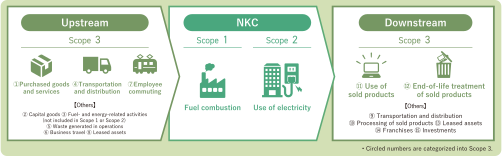
Initiatives Toward Carbon Neutrality
Promoting solar power generation
At several NKC Group production sites, solar panels have been installed to supply a portion of the electricity used through solar power generation. Going forward, we will continue to promote the adoption of renewable energy sources that generate no CO2 emissions.
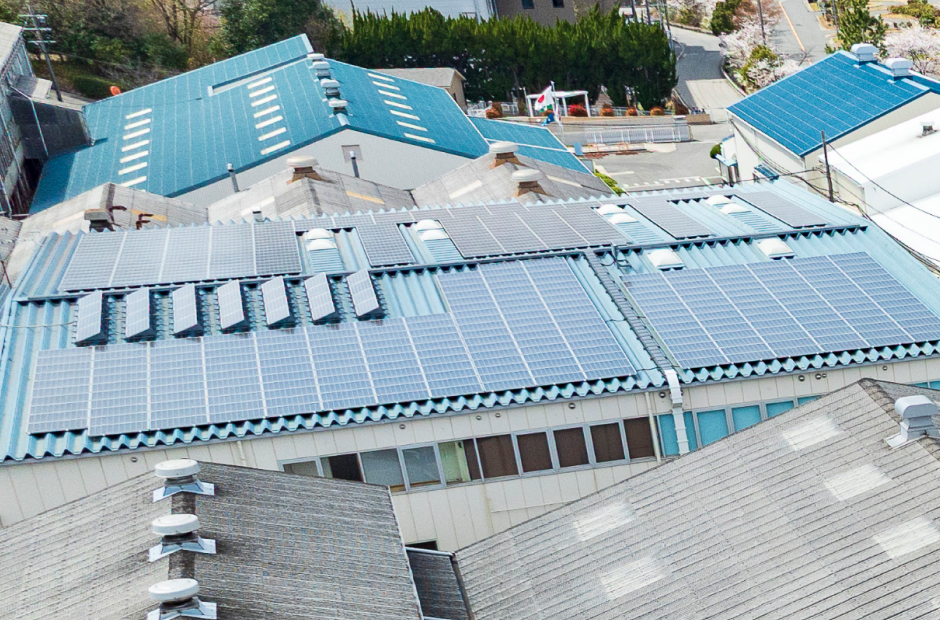
Promoting the use of eco-cars
Since 2002, the NKC Group has been an early adopter of environmentally friendly vehicles (eco-cars)*, including fuel-efficient hybrid cars and electric vehicles (EVs) that emit no CO2, progressively replacing all company-owned vehicles with eco-cars.
In particular, our adoption of fuel cell electric vehicles (FCEVs) not only eliminates noise and exhaust emissions but also provides external power supply functionality, allowing these vehicles to serve as emergency power sources in the event of disasters or power outages.
For these efforts, NKC received the 2nd Osaka Transport Eco Challenge Award in 2013.
*Applicable under Japan’s eco-car tax incentive program established by the Ministry of Land, Infrastructure, Transport and Tourism (MLIT).

Implementation of Energy-Saving Measures
Each NKC Group production site engages in year-round energy-saving initiatives. At the Mie Plant, for example, since fiscal 2023 we have been reviewing the entire air compressor piping system, examining air distribution by work area, and optimizing compressor pressure levels. These efforts aim to establish a system that supplies air to equipment only when needed, where needed, and in the amount needed.
Other production sites are steadily advancing similar improvement initiatives, including upgrading to high-efficiency power receiving equipment, addressing air leaks, introducing LED lighting, and enhancing the efficiency of air conditioning systems.
